Seeing Double in the Neon Jungle: Questions for Sarah Robles
Film photographer Sarah Robles works in the dimming visual language of neon —a technology first patented in 1910 by French engineer Georges Claude, and widely adopted by American consumers in the booming post-WW2 economy. Neon signage would play a key role in roadside architecture, diners, motels, movie palaces and entertainment districts throughout the 1950s — mainly in Las Vegas and along Route 66. Along with its luminous glow, it carried with it a promise of optimism and spectacle amidst the car-driven nightlife that defined the Golden Age of consumerism in the U.S. Now much of that hand-made neon is being replaced with L.E.D, and the art of bending glass tubes filled with noble gases is slowly vanishing.
Raised in Las Vegas, Sarah has a natural attachment to artificial light from growing up in the neon jungle of the Strip. Based in San Diego, she often is traversing the city’s nightlife in search of neon and other urban light sources. Her approach blends observation with experimentation, using long exposures and multiple exposures to reveal the ethereal moods and surrealistic atmosphere it brings to a single shot. Filtered by her nostalgia, she seeks neon as a living and fading material in which history is at stake and dreams are in the foreground.
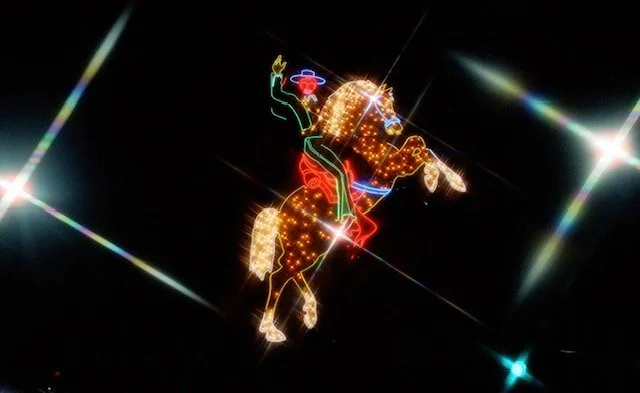
This photo takes me back to when I was roaming around downtown Las Vegas on a weekday after a long day of work. I used a cross filter that made the street lights on the side the perfect capture.
Safelight: How did growing up in the neon jungle of Las Vegas shape the way you see and photograph urban environments after dark?
Sarah: I find myself eager to see what environments look like after dark and try to imagine what they might look like once the lights turn on. Growing up in Las Vegas, I was surrounded by neon and artificial light everywhere, so I naturally find myself paying attention to how spaces transform at night.
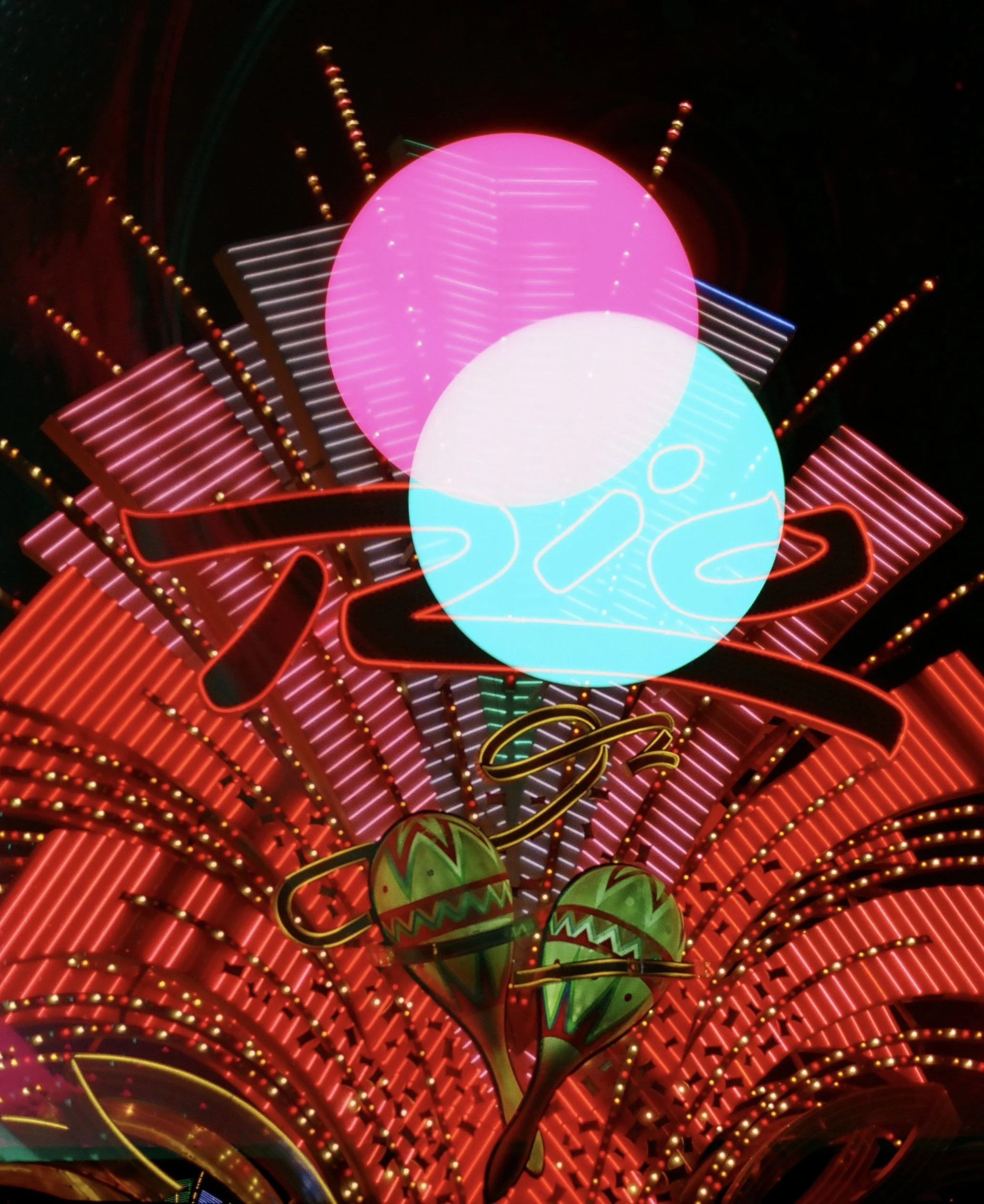
The two circles I created with a lamp that I had in my bedroom one night. The colors complement the famous Rio sign.
Safelight: You often experiment with multiple exposure in your photography. What draws you to employ this technique, and does it lend itself to deeper interpretation?
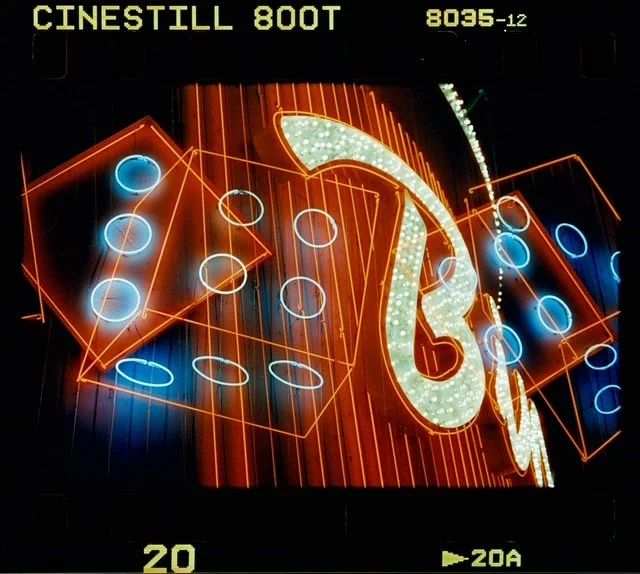
This one is a double exposure of the Binion’s sign with the dice. My girlfriends and I would always go where we weren’t supposed to, which made taking photos more thrilling. The security guard told us we weren’t allowed, but allowed us to take some photos before kicking us out, this one turned out to be a favorite.
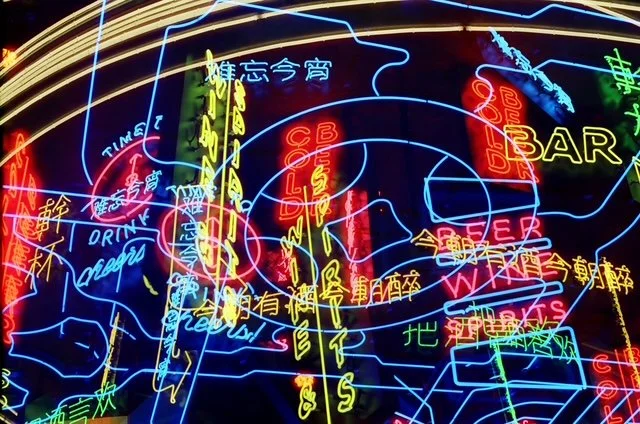
This is another multiple exposure. This was shot inside a food court and each sign was shot individually. I think it’s a pretty cool photo for this being shot inside a food court.
Sarah: I really like how I can take two things that I find beautiful and merge them together into one image. For me, it’s a way of experimenting and pushing photography into something more abstract. There’s also an element of surprise to it. I’m shooting multiple images onto a single frame and I don’t fully know how it will look until I get the scans back, which makes the process really exciting. Sometimes they come out really great and sometimes they don’t, which is okay and part of the fun.
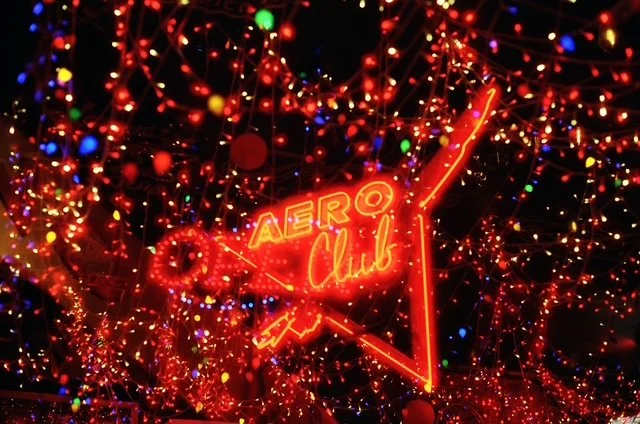
Aero Club is one of my favorite bars in San Diego and a must to take people who are in town visiting. This bar makes me so happy with all the Christmas lights inside and that classic sign. This is a double exposure of the outside sing and the inside of Aero Club.
Safelight: Many of the neon signs and building facades you photograph are becoming increasingly endangered or have already been demolished. Does architectural preservation factor into your creative process?
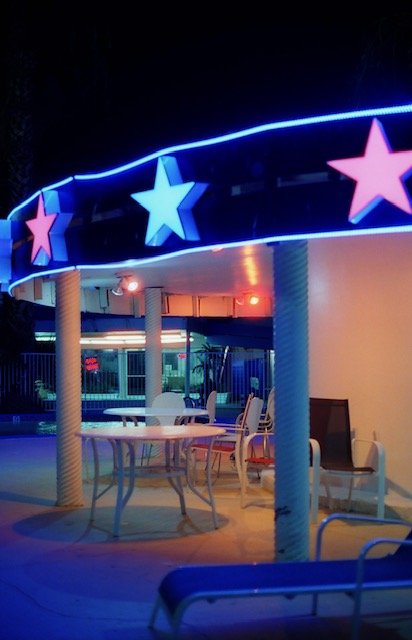
This was taken in Las Vegas at the Diamond Inn Motel. I loved the pool area specifically because of all of the pink and blue colors. It has been torn down and no longer exists, but at least I was able to capture it.
Sarah: Absolutely. When I first moved to San Diego, I drove around trying to find anything that lit up at night, especially neon. I did find a few signs, but most of them no longer turn on, which is a bit of a bummer because those buildings would have so much more character if the signs were still illuminated. Because of that, I haven’t found myself shooting much neon here. But when I do come across it, I get really excited to photograph it.
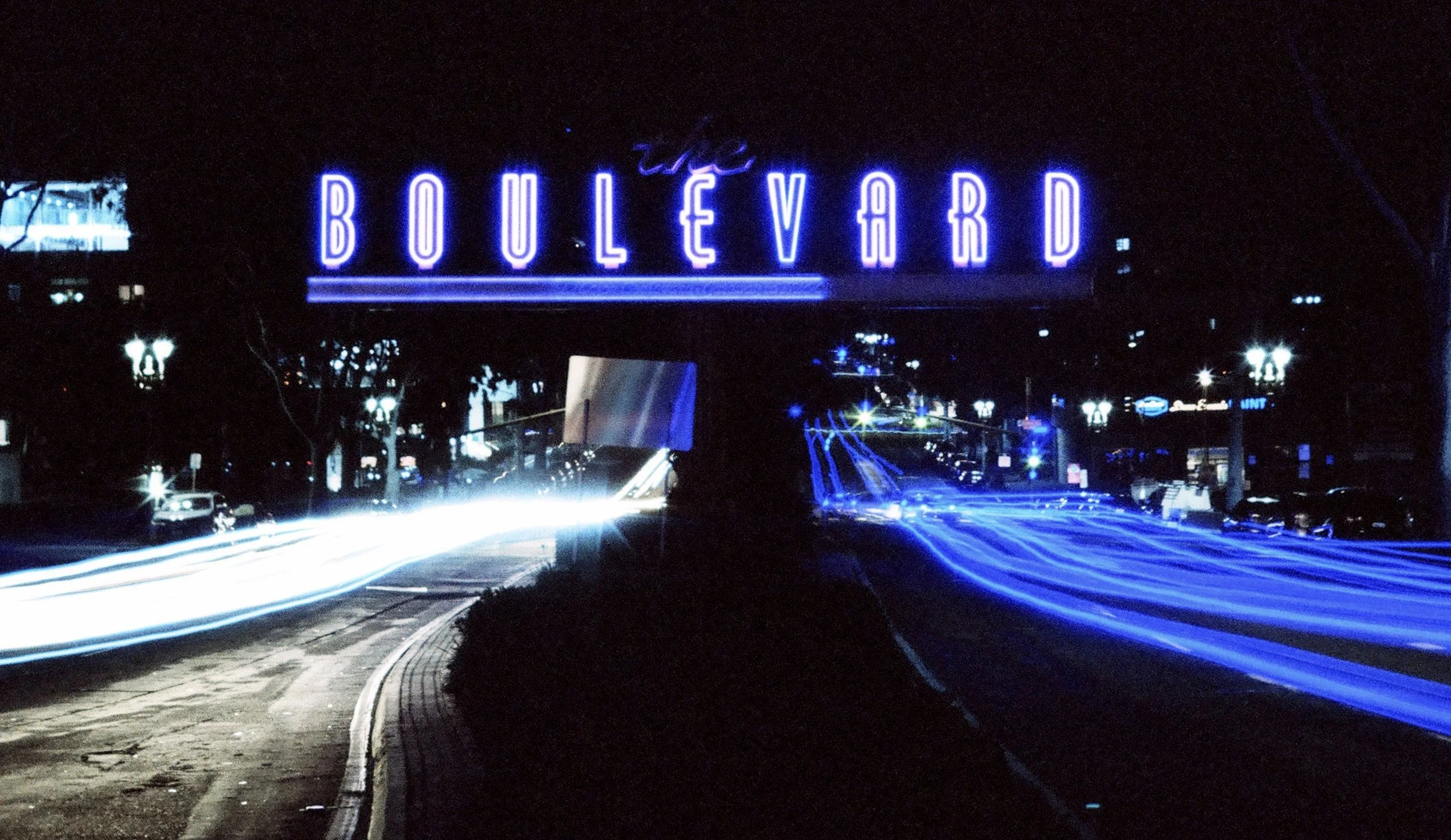
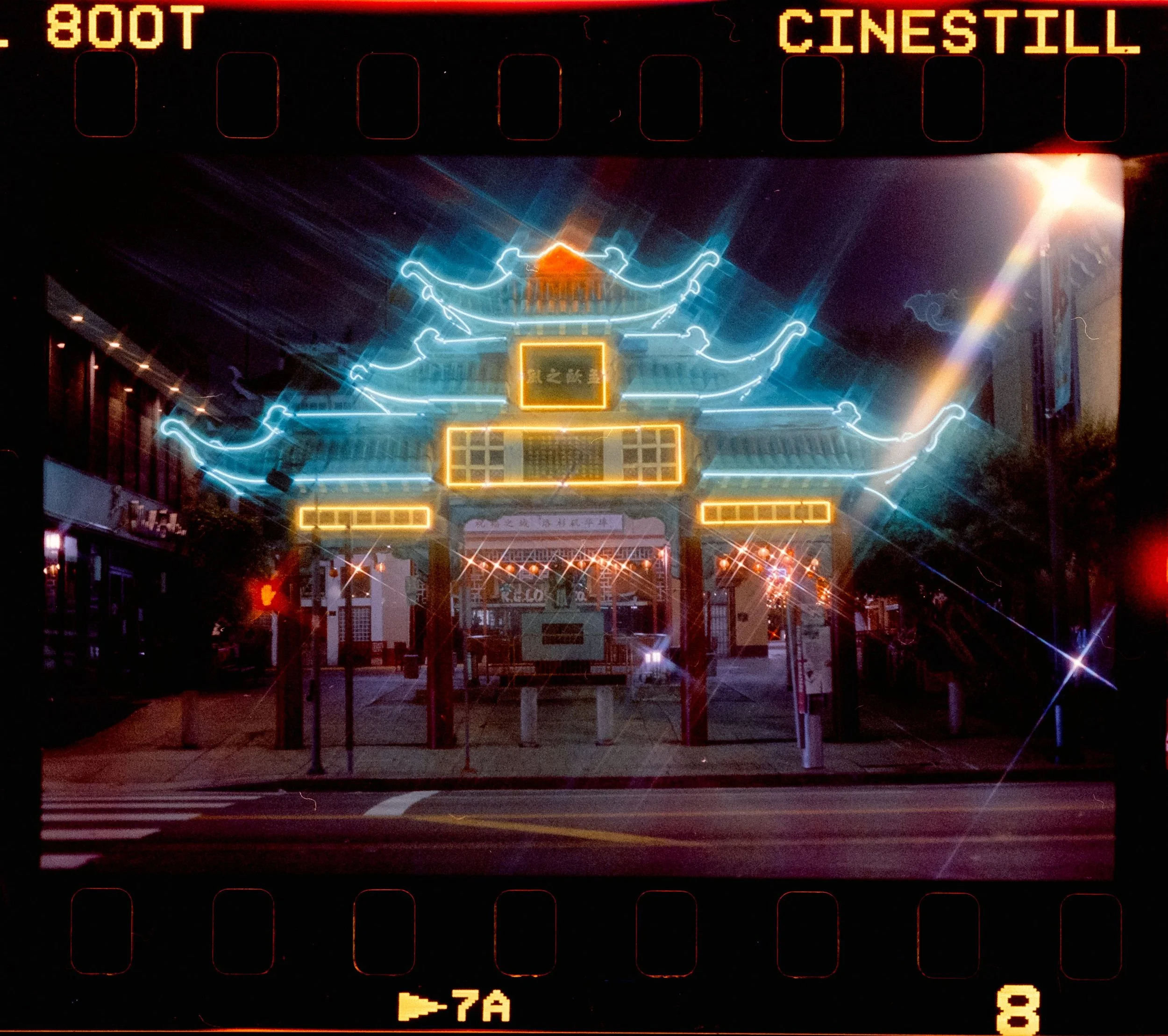
I moved to San Diego a little over a year ago now and live right by the Boulevard sign. I was able to get my Neon fix and shot this long exposure with limo turquoise, which turned the red into blue.
Safelight: How does the atmosphere of each city’s nightscape affect the mood or outcome of your images? Are there any film stocks that are integral in achieving this artistic vision?
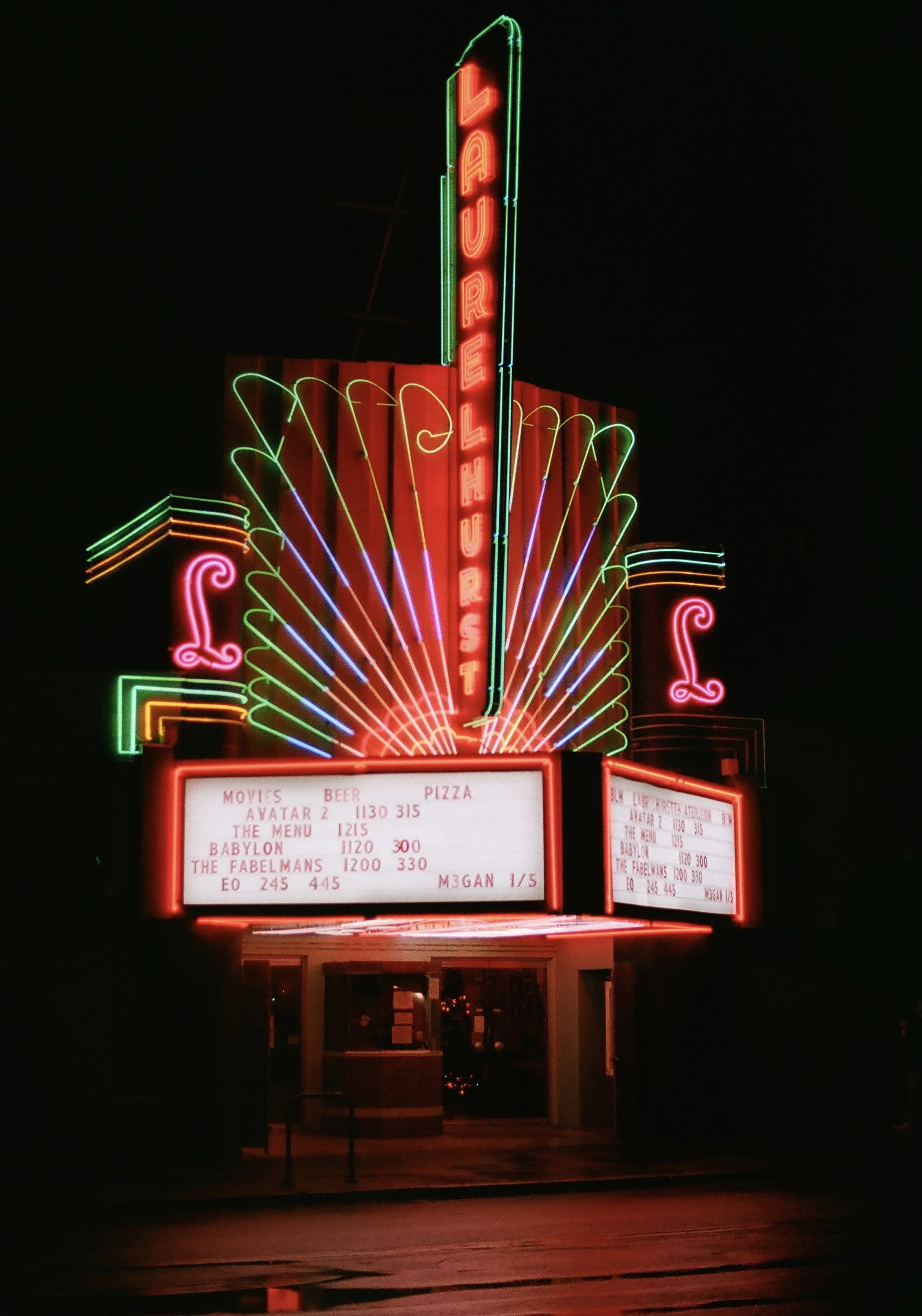
I was visiting Portland and I was on the hunt for neon. I came across this beautiful theater. I’m obsessed with the colors.
Sarah: I often find myself photographing buildings that are lit up at night vs. just neon signs which tends to give my images a slightly spooky or uneasy feeling. That atmosphere naturally comes from the lighting and the emptiness of nighttime spaces. I also mostly shoot Cinestill 800T, it’s excellent for night photography and creates a beautiful halation around lights that really enhances that mood.
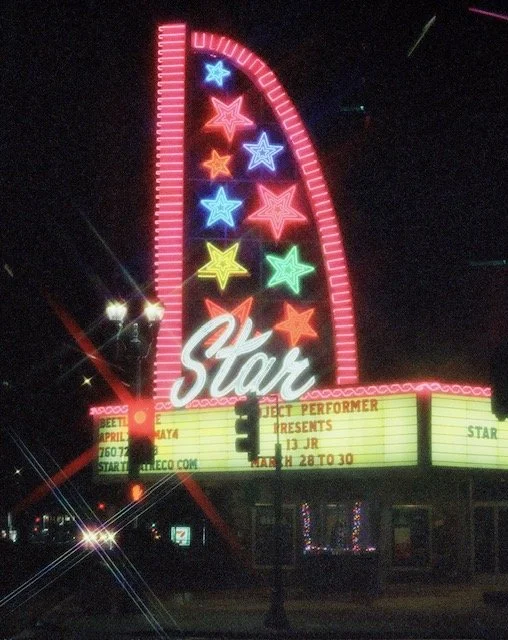
I am always googling neon in San Diego or near San Diego, and Star theatre popped up. We were heading back to San Diego from a Las Vegas trip and we stopped here before heading home. I was so exhausted, but totally worth stopping by Oceanside for this beauty.
Safelight: There’s a heavy sense of nostalgia and cataloging personal memory in your work. How does your lived experiences guide your decisions behind the lens?
Sarah: I moved to Las Vegas when I was only nine months old, so I grew up surrounded by lights everywhere. For a long time, I didn’t fully appreciate how unique that environment was. It wasn’t until my late twenties, when I started traveling more, that I realized how special those nighttime lights were. Now lighting really stands out to me. It adds so much beauty and atmosphere to a place at night. When I see something like that, I almost always feel compelled to stop and photograph it.
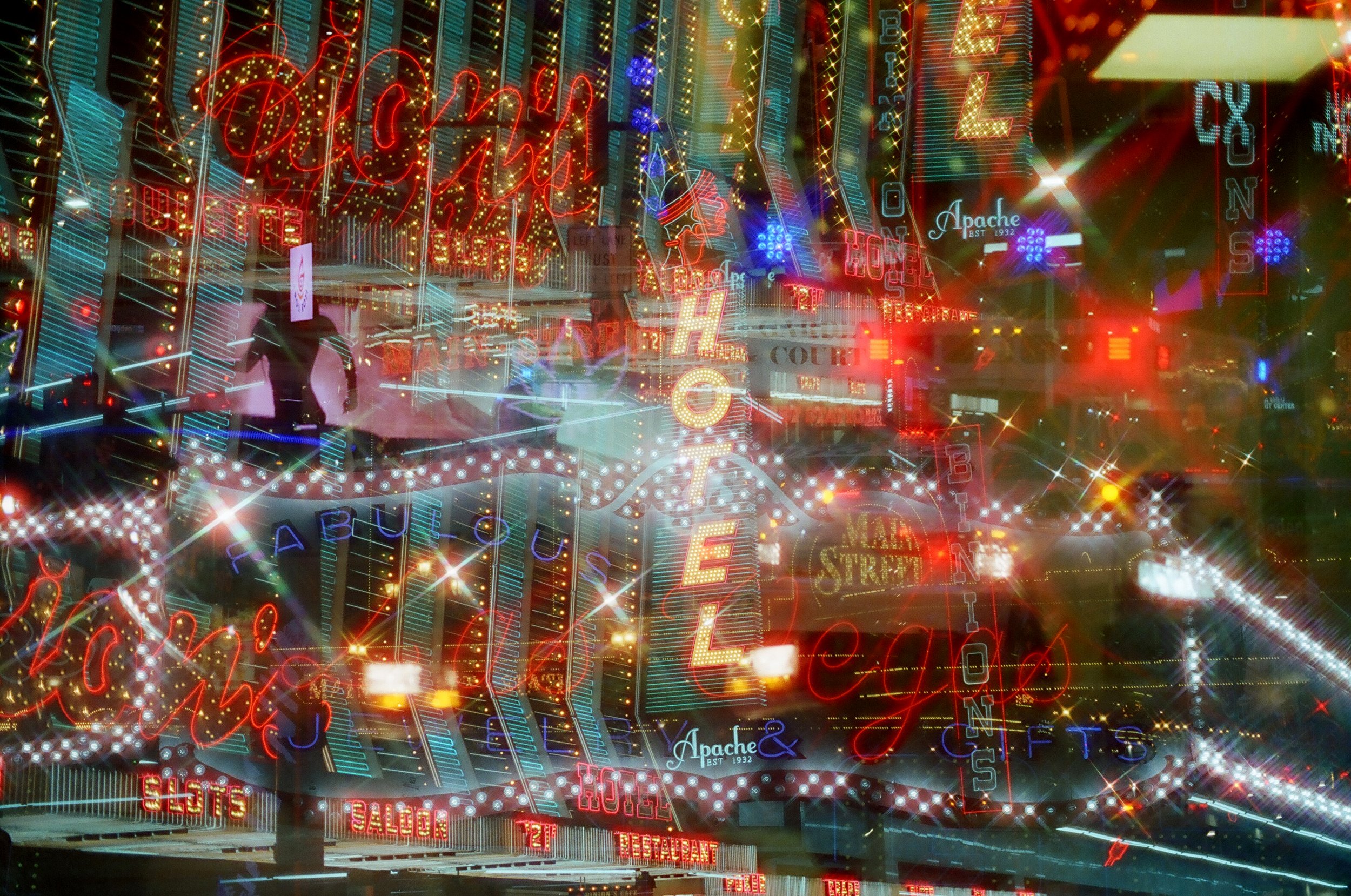
I used the same frame over 15 times. I was experimenting with multiple exposure and this is what I ended up with. I really love this image because the placement was unintentional and I LOVE the way Las Vegas is right down on the bottom perfectly centered.
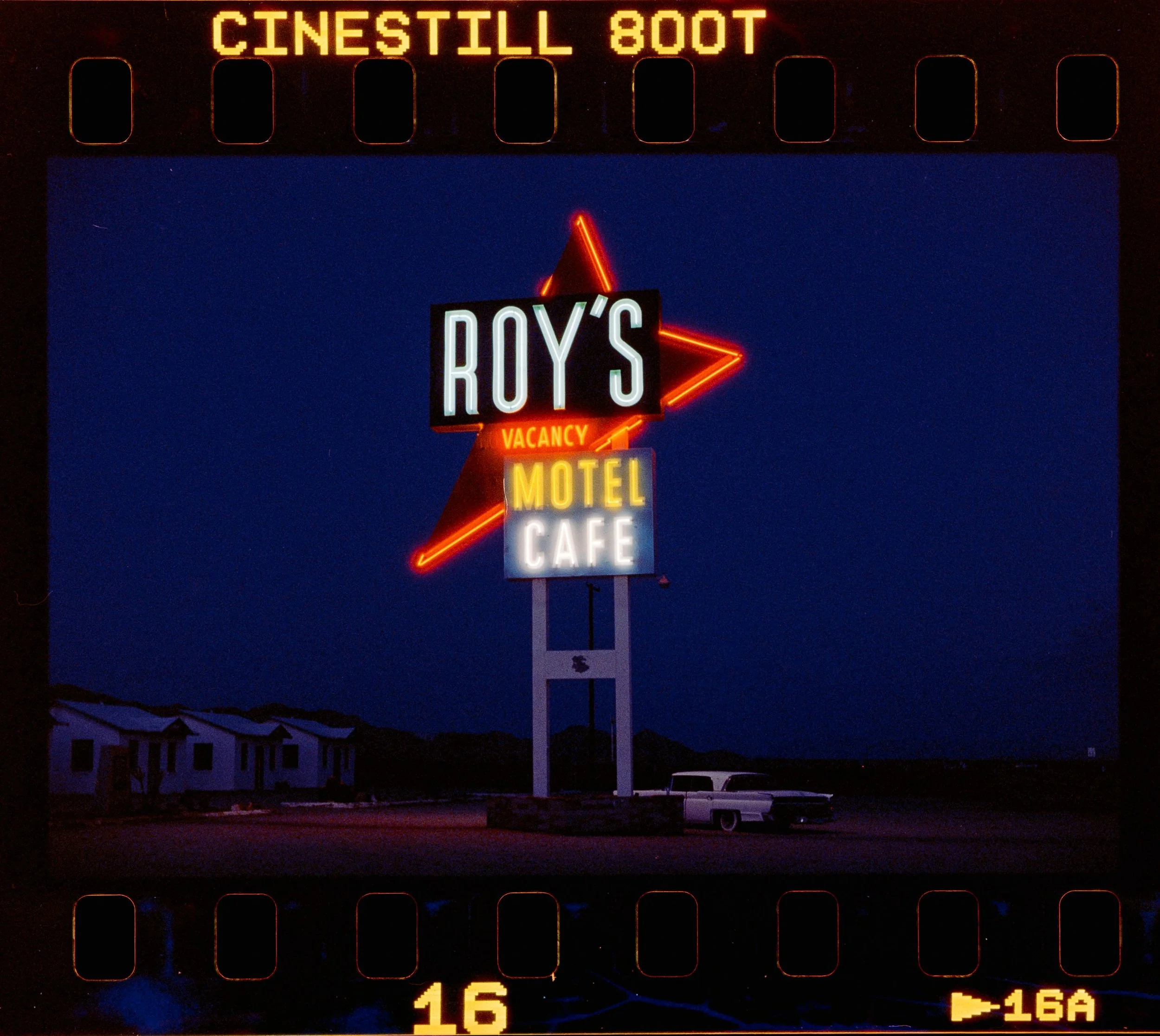
I took a day trip and got there in the afternoon and waited until it was dark to take daytime vs. nighttime photos. The only thing on the road was this beautiful sign. It was worth the drive.